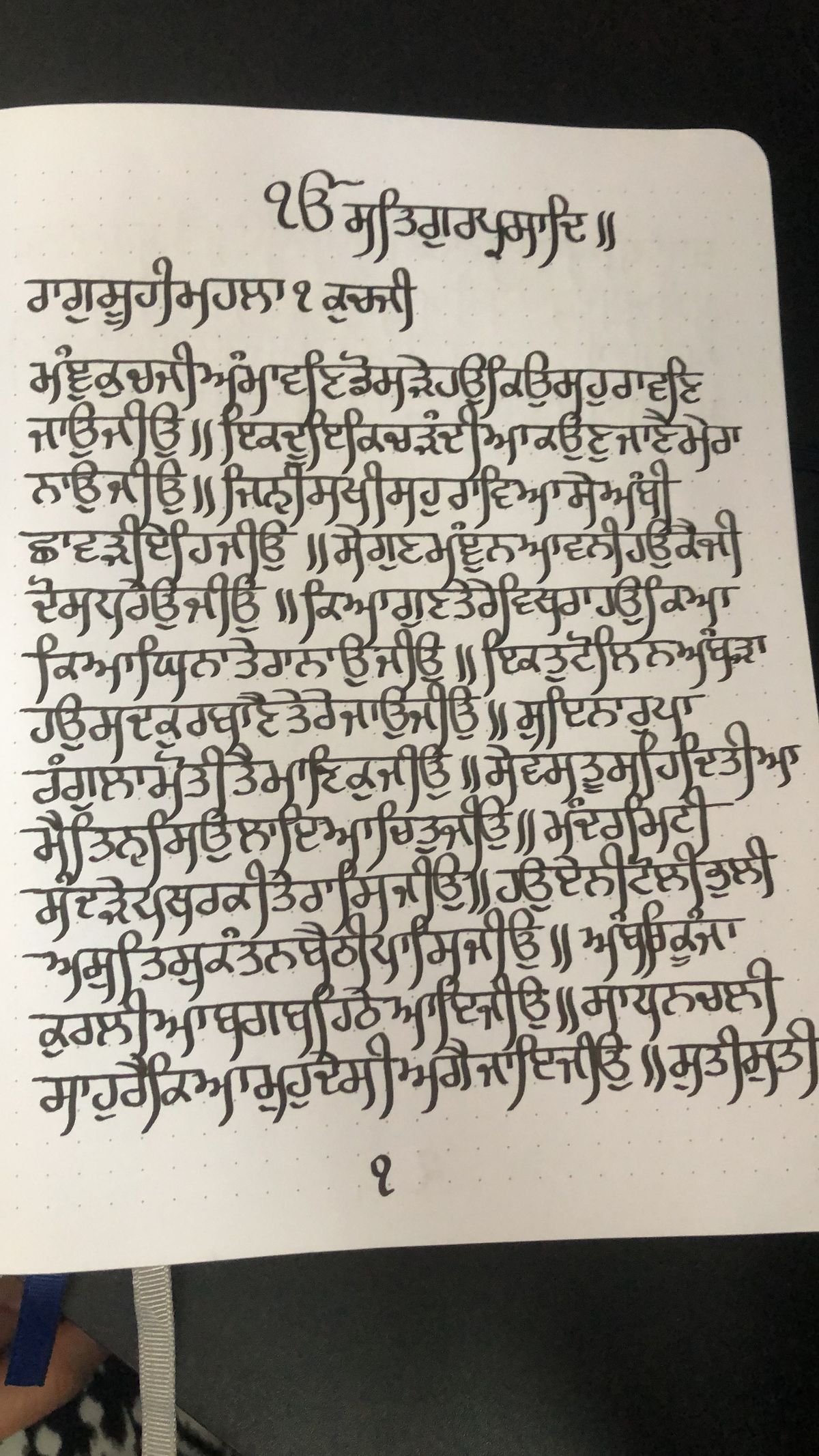
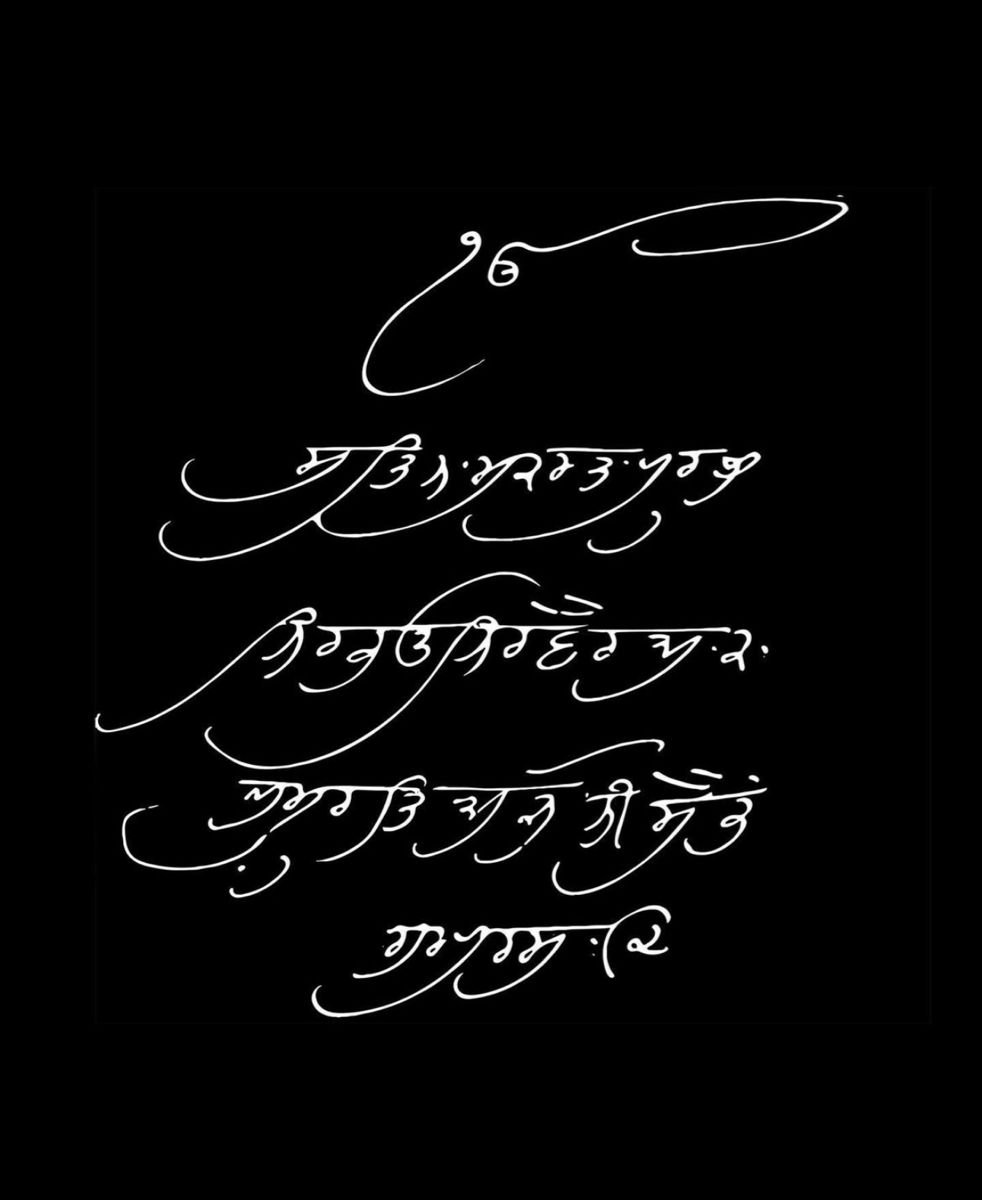
Every calligraphic tradition is really two stories at once: the story of a language, and the story of the hand that learned to make it beautiful. For Punjabi, those two stories are unusually close together. The script most Punjabi calligraphy is written in — Gurmukhi — was shaped by a single historical moment, for a specific purpose, and it has carried the weight of that origin ever since. Before getting into brushes and nibs, it’s worth understanding what’s actually being written.
What is Punjabi?
Punjabi belongs to the Indo-Aryan branch of the Indo-European language family, in a subgroup linguists call Northwestern Indo-Aryan. It’s spoken by somewhere around 100–150 million people as a first language, concentrated in the Punjab region that today straddles India and Pakistan — the name itself comes from Persian panj-āb, “five waters,” after the five rivers that define the region. That split border is also a linguistic one: in Pakistani Punjab, the language is generally written in Shahmukhi, a Perso-Arabic script read right to left, while in Indian Punjab it’s written in Gurmukhi, an Indic script read left to right.
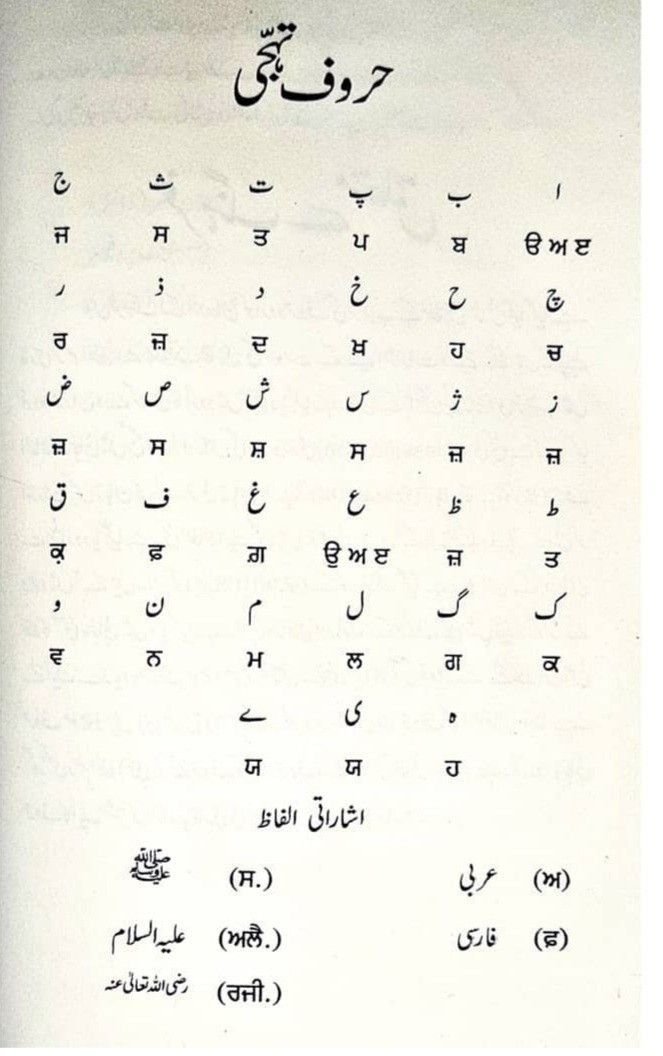
A large dialect continuum — Majhi, Malwai, Doabi, and many others — spans both sides, and estimates of how many distinct dialects exist range from about a dozen to nearly thirty, depending on where a linguist draws the line.
One feature sets Punjabi apart from almost every other Indo-European language, including its close relatives Hindi and Urdu: it’s tonal. Pitch changes on certain syllables can shift a word’s meaning, a trait more commonly associated with East Asian languages than South Asian ones. Linguists trace this to older consonant sounds that softened over time and left their pitch behind — a reminder that a script is never just recording sound, it’s recording the history of how those sounds changed.
The Birth of Gurmukhi
Gurmukhi — the name means roughly “from the mouth of the Guru” — was standardized in the sixteenth century by Guru Angad Dev, the second Sikh Guru. He didn’t invent it from nothing: earlier trade scripts in the region, particularly the Laṇḍā scripts and their Śāradā-descended predecessors, already carried the raw material. What Guru Angad Dev did was fix it — giving the letters a consistent order, a consistent shape, and a consistent set of rules — specifically so that Punjabi could be written down clearly and taught widely. The entire 1,430-page Guru Granth Sahib, the central scripture of Sikhism, is written in Gurmukhi, and that alone tied the script’s fate permanently to the language and the faith.
The modern alphabet is often called paintī — “the thirty-five” — after its thirty-five original letters, though six additional consonants (mostly borrowed sounds marked with a nukta, a small dot, for words absorbed from Persian and Arabic) have joined it since. Under Maharaja Ranjit Singh’s Sikh Empire in the nineteenth century, Gurmukhi spread beyond religious use into administration and record-keeping, cementing it as the working script of the region. In the twentieth century it became the official script of the Indian state of Punjab.
How the Script Actually Works
Gurmukhi isn’t an alphabet in the way Latin script is — technically it’s an abugida. Every consonant carries a built-in, unwritten vowel sound by default. To change that vowel, you add a diacritic (a matra) above, below, before, or after the letter, rather than writing out a separate vowel character. Only when a vowel opens a syllable — at the very start of a word, for instance — does it get its own independent letter form. This is exactly the distinction the multi-font writing tool on this site handles automatically: type a vowel after a consonant and it becomes an attached matra; type it at the start of a word and it stays independent.
Gurmukhi also uses conjunct forms for certain consonant clusters, and, tying back to that earlier point about tone, uses specific consonants and an intervocalic “h” to mark pitch in writing. None of this is decorative — every stroke is doing linguistic work, which is part of why calligraphers describe the script as having its own internal logic that a good hand has to respect, not just imitate.
A Sacred and Scribal Art
Long before it was a design choice, Gurmukhi calligraphy was a devotional discipline. Generations of scribes, or likhārīs, hand-copied the Guru Granth Sahib and other Sikh texts with extraordinary precision — the physical act of writing treated as an extension of reverence for the words themselves. Major centers of manuscript production grew up around Amritsar, Kartarpur, and Anandpur Sahib, alongside gurdwara-run schools that trained new generations of scribes.
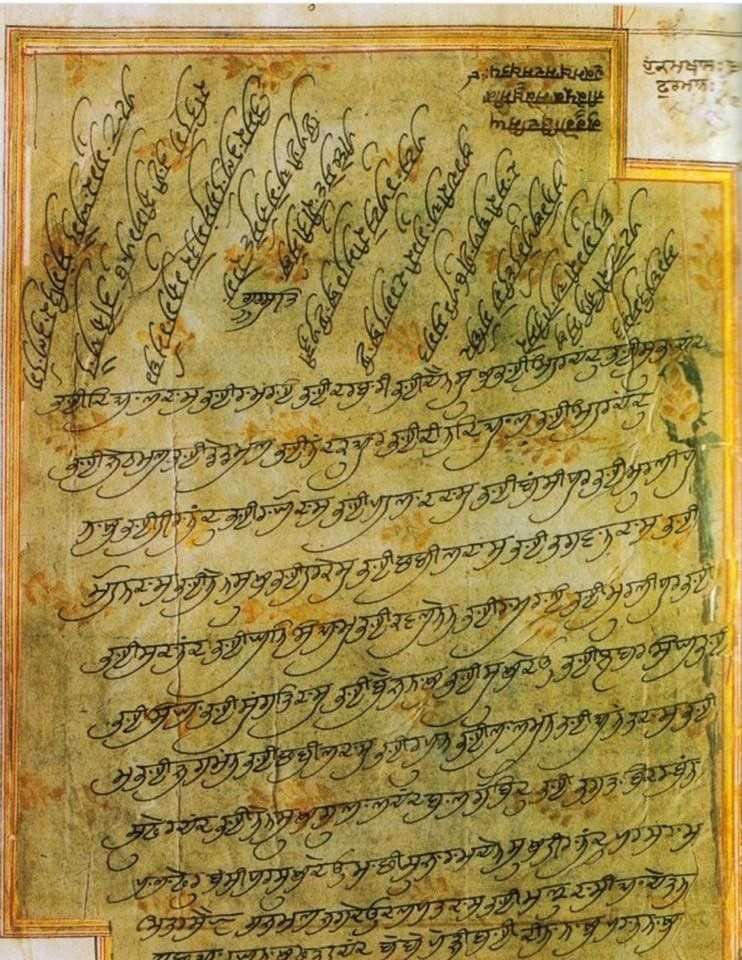
During the eighteenth and nineteenth centuries, royal and religious patronage pushed the art further: illuminated manuscripts began appearing with decorative floral borders and ornamental headings, often visibly influenced by the Persian and Mughal art traditions surrounding Punjab, while keeping a visual identity distinctly its own. It’s a useful reminder that Punjabi calligraphy never developed in isolation — it absorbed the decorative language of its neighbors even while serving a purpose entirely rooted in Sikh devotional life.
A Living Art, Not a Museum Piece
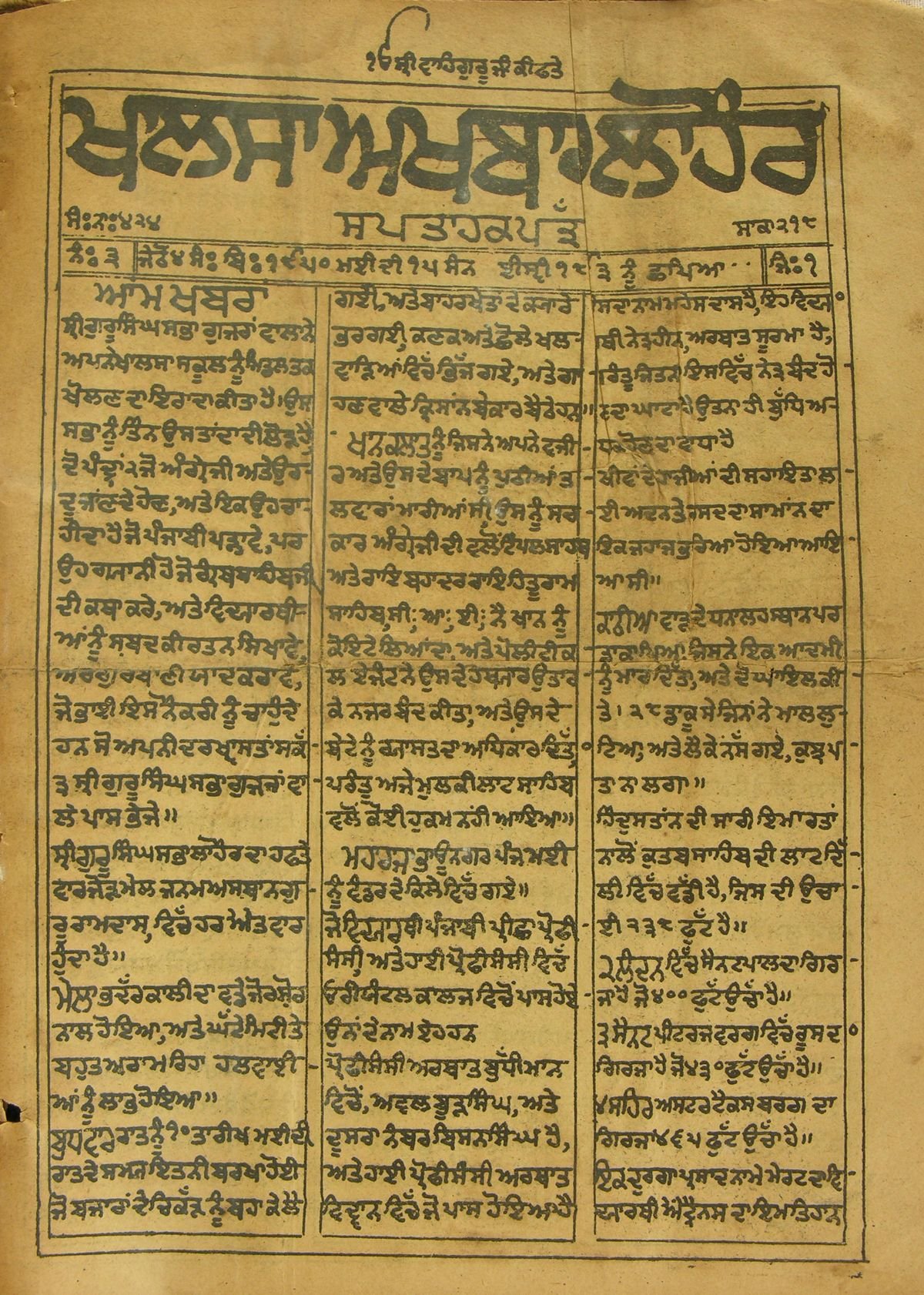
Print and, later, digital typography did to Gurmukhi what they did to handwritten traditions everywhere: they made the hand-lettered manuscript far less necessary for everyday communication. For a while, that put real pressure on the calligraphic tradition. But the craft didn’t disappear — it moved. Contemporary calligraphers, many of them part of the global Punjabi diaspora, have kept the practice alive through workshops, exhibitions, and new digital typefaces built on traditional letterforms, carrying a centuries-old visual language onto screens it was never originally designed for.
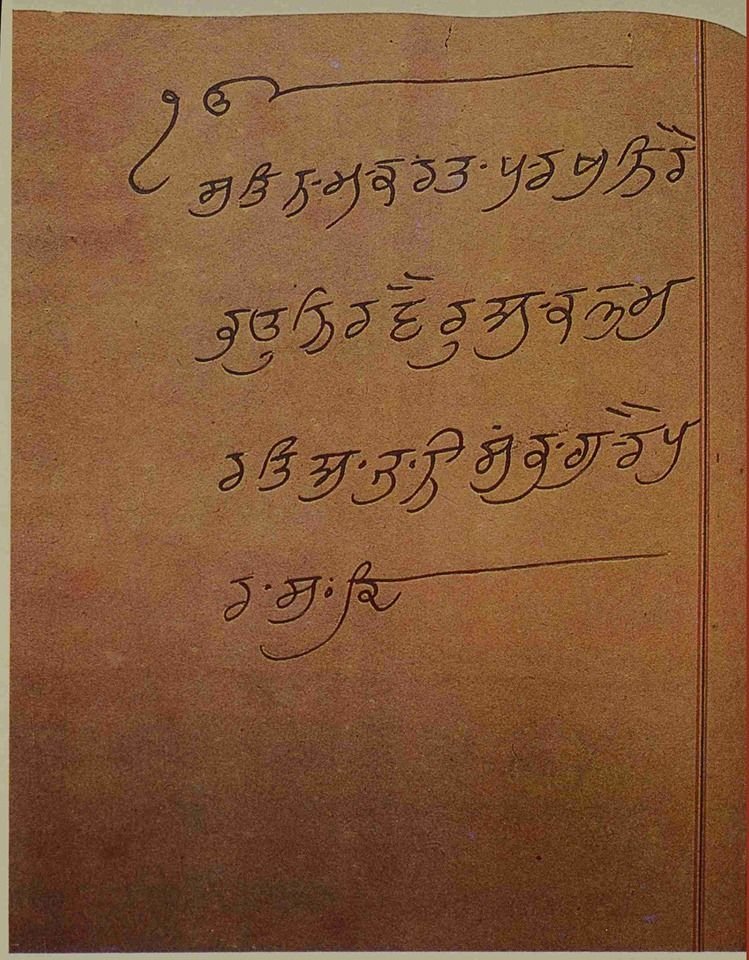
That’s the tradition this site exists inside of — not a replica of the past, but a continuation of it. The same questions a sixteenth-century scribe faced — how should this letter curve, how much weight belongs in this stroke, how does a vowel sit against its consonant — are still the questions being asked every time someone opens the writing studio here and picks up a virtual pen.